What the carrier result tells you
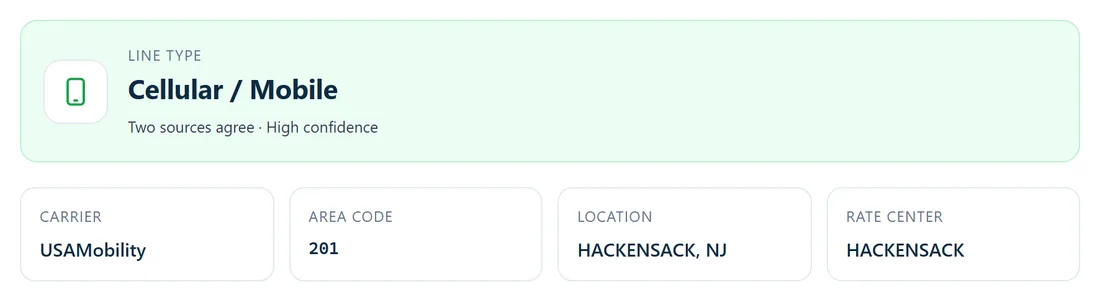
US phone numbers are handed out to carriers in blocks. When you look up a number, Cellphone Validator finds the block it belongs to and shows:
- Carrier / company: the telephone company the block was assigned to.
- OCN: the Operating Company Number, a code that identifies that carrier in the industry.
- Line type: whether the block is wireless (mobile), landline or VoIP.
- Rate center and state: the local calling area the block belongs to.
Why carrier and line type matter for calling
If your team calls or texts leads, the carrier tells you more than a name:
- A wireless carrier usually means a personal cell phone, often the fastest way to reach a decision maker directly.
- A local exchange carrier usually means a landline: an office line, a front desk or a home phone.
- A VoIP provider can be anything from a company phone system to a free app number, so treat it with care.
Mobile numbers also carry stricter rules for autodialed and prerecorded calls and texts in the US. Read our TCPA guide before you load cell phones into a dialer.
A note on ported numbers
People can keep their number when they switch carriers. The carrier shown is the one the number block was assigned to, which may not be the carrier serving the line today. Here's how porting affects lookups.
Checking carriers for a whole list
Use bulk validation to add carrier, line type and location to every number in a CSV, then filter or export by carrier.
Frequently asked questions
Is the carrier lookup free?
Yes. Single lookups on the homepage are free and need no account, within a fair-use daily limit.
Can a carrier lookup tell me who owns a number?
No. Carrier data identifies the phone company, not the person or business using the number. Cellphone Validator does not provide owner names.
Why does the lookup show a carrier I didn't expect?
Usually because the number was ported to a new carrier, or because the block was assigned to a wholesale carrier that resells service under another brand.